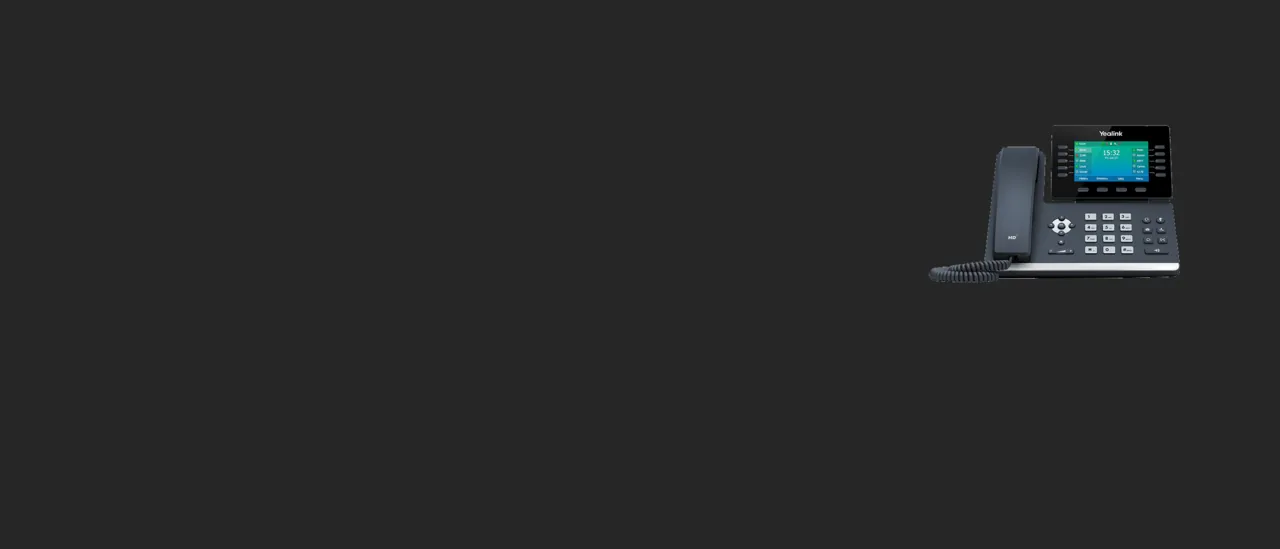
Yealink T54W desk phone centred on a neutral Gray 10 studio surface
3CX vs Aircall

3CX vs Aircall — different products, often confused.

What each one actually does.

Aircall is a cloud-based outbound dialer built for sales and customer-support teams. Strengths: deep CRM integration (Salesforce, HubSpot, Pipedrive, Intercom), click-to-call from the browser, call disposition tracking, sales-call playback for coaching, power-dialer features, voicemail drop, integrated SMS for follow-up. Priced per-user-per-month, premium tier.

3CX is a general-purpose business PBX. Strengths: per-system pricing economics, call queues, IVR, mobile and desktop apps, video conferencing, hot desking, reception switchboard, recording, CRM integration. Built to be the phone system for an entire firm — sales team, accounts, reception, partners, anyone. Priced per Simultaneous Call per year.

UK pricing comparison.

Aircall publishes UK pricing in three tiers: Essentials, Professional, Custom. 24-month contract assumed, ex-VAT. Aircall typically requires a minimum 3-user commitment.

ConfigurationAircall EssentialsAircall Professional3CX (Port Phones managed)
Per-user monthly feeEssentials~£30 / userProfessional~£50 / user3CX~£8 / user
25 users monthlyEssentials£750 / moProfessional£1,250 / mo3CX~£200 / mo
10-person sales team monthlyEssentials£300 / moProfessional£500 / mo3CX~£100 / moAll-in cost. Sales-team-only is well below 3CX's smallest SC tier.
25-user 24-monthEssentials~£18,000Professional~£30,0003CX~£7,800

Aircall UK pricing snapshot May 2026 (aircall.io). 3CX pricing from our deployment stack — see honest pricing. Aircall's effective price is sometimes lower than list at sales-conversation stage, but Essentials at £30/user is the consistent floor.

When Aircall is genuinely the right pick.

Aircall is a good product for a specific situation. Don't switch away from it if you fit this profile:

  • Your primary phone use is outbound sales calling, and the team is 5–30 reps making 40+ calls per day each. Aircall's power-dialer, call disposition tracking, and CRM auto-logging save real time per call. Twenty reps making forty calls a day is 800 calls daily; even 30 seconds saved per call is 6.5 hours of selling time daily. At sales-team scale, the premium pricing pays back.
  • Your sales process is tightly integrated to HubSpot or Salesforce with Aircall-specific automation. If your sales-ops have built playbooks around Aircall's call-disposition reporting, replacing it disrupts the workflow even if 3CX matches the call-flow features. Stay until the workflow tooling can move with it.
  • You're a sales-led SaaS startup where the CRM is the operational system of record. Aircall plus HubSpot or Salesforce is a coherent stack for that motion. 3CX-managed plus the same CRM is also a coherent stack but you'll be the one configuring the bridge.

When Aircall is the wrong pick (very common).

Aircall is wrong for many of the firms that buy it. The common mistake: an SME signs up to Aircall for a 10-rep sales team, then over the next 12 months it spreads through the rest of the firm — accounts uses it for client calls, reception uses it for inbound, the MD uses it for partner calls. The per-user pricing now applies to 30 users at £30 each, but only 10 of them are doing sales work. The other 20 are paying sales-tool pricing for general office telephony.

If you're past 20 users on Aircall and only 30–40% of them are sales-active, the economics have left the original justification. You're paying £600/month for 20 non-sales users who'd be just as productive on £160/month worth of 3CX.

The split-stack option.

One pattern we deploy regularly: 3CX for the firm, Aircall (or similar) for the sales pod only. 3CX handles reception, queues, accounts, partners, mobile, video — the general PBX layer. Aircall stays for the sales team if they actively use the power-dialer and CRM-integration features. Integration is straightforward via SIP gateway.

This typically saves 60–70% of total telephony spend at SME scale while keeping the sales tool the sales team likes. The audit conversation often surfaces this option once we look at who's actually using Aircall's sales features vs who's just on it because IT bought it for the team.

Feature parity comparison.

  • CRM integration: Aircall integrates with 100+ apps including Salesforce, HubSpot, Pipedrive, Zendesk, Intercom. 3CX PRO integrates with most major CRMs but the integration is shallower on sales-specific features (no power-dialer, no automated call disposition logging in the same way). For general click-to-call and screen-pop, parity. For sales-ops automation, Aircall wins.
  • Mobile and desktop apps: Aircall apps are polished and sales-focused. 3CX apps are polished and general-purpose. Both work.
  • Call recording: Both include recording at standard tier. Aircall's coaching playback features (call snippets, comments, scoring) are stronger for sales-team coaching. 3CX's recording is general-purpose: better for compliance, parity for review.
  • Power dialer / progressive dialing: Aircall has it. 3CX doesn't, natively. Available via third-party integrations on 3CX but not first-class.
  • Voicemail drop: Aircall has it. 3CX doesn't, natively.
  • Reception / general-office features: 3CX has hot desking, switchboard, IVR designer, queue overflow, video conferencing, business SMS. Aircall has lighter equivalents — perfectly adequate for sales-team needs, not the full reception/operations layer.
  • UK number ranges and SIP: Both support UK numbers cleanly. 3CX through a UK partner connects to Gamma SIP at trade rates; Aircall provides numbers through their own carrier relationships.

Who should pick which.

  • Pick Aircall if: you're a sales-led firm with a dedicated sales pod where the power-dialer and CRM-integration features earn back the £30+/user premium, and the rest of the firm has its phone needs solved elsewhere.
  • Pick managed 3CX if: you need a phone system for the whole firm — reception, accounts, partners, sales, mobile — at SME-friendly TCO, with optional sales tooling layered on top.
  • Pick both (split stack) if: 3CX as the firm's PBX, Aircall for a 10–30 person sales pod that genuinely uses the dialer features. This is often the right answer for scale-up SaaS firms.

What we'll tell you at audit.

The honest audit question is: which percentage of your Aircall users actively use Aircall's sales features? If it's 60%+, you may be in the right tool — we'll tell you. If it's 30% or less, you're paying sales-tool prices for general telephony, and the split-stack or full-switch will save real money. Either way, the analysis is free. Book a free audit and we'll run the numbers.